
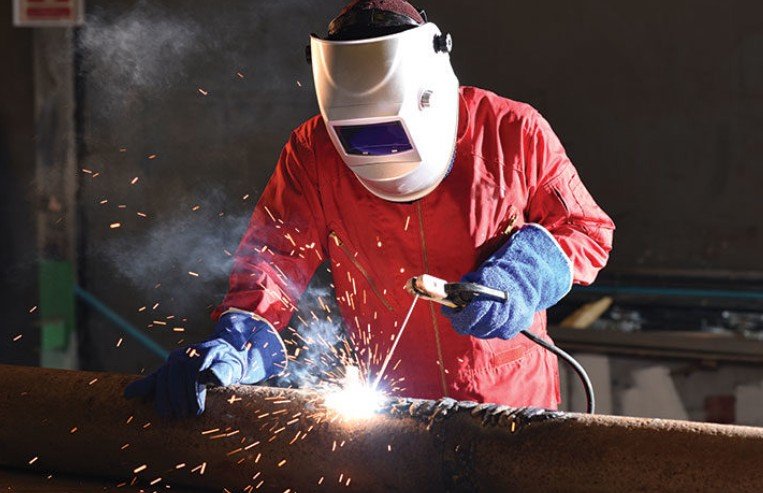
Welding Inspection Basics: What Every Welder Should Know
Welding Inspection Tips to Ensure Stronger Joints
Basic Information
In the world of metal fabrication, construction, and manufacturing, welding plays a vital role in creating durable and precise structures. However, the integrity of a welded joint is not determined merely by the skill of the welder but also by how effectively the weld is inspected. Welding Inspection serves as a critical process that ensures every weld meets quality, safety, and industry standards. Whether you’re an experienced professional or a beginner entering the trade, understanding the fundamentals of welding inspection is essential to maintaining reliability and performance in any welded structure.
Understanding Welding Inspection
Welding Inspection refers to the systematic evaluation of welds to confirm that they comply with design specifications, codes, and standards. The process is not limited to identifying visible flaws; it involves assessing both surface and internal conditions of the weld using various testing techniques.
The goal of inspection is to verify that the welds are structurally sound and free from defects that could compromise the overall strength or safety of the component. In industrial projects—such as pipelines, pressure vessels, or bridges—an unnoticed defect could result in significant failures or costly repairs. Therefore, consistent inspection practices are a cornerstone of quality assurance in welding operations.
The Role of the Welding Supervisor
A Welding Supervisor plays a pivotal role in overseeing both the welding and inspection processes. Their responsibilities extend beyond managing welders—they are accountable for ensuring that the correct welding procedures, materials, and inspection methods are followed.
A qualified Welding Supervisor typically:
-
Reviews and approves welding procedure specifications (WPS).
-
Monitors welding performance to ensure compliance with standards.
-
Coordinates with inspectors to schedule and document inspection activities.
-
Provides technical guidance on defect correction and rework.
By maintaining close collaboration with inspectors and welders, supervisors ensure that every weld meets the project’s quality expectations and adheres to safety regulations.
Key Stages of the Welding Inspection Process
Welding inspection is not a single step; it occurs throughout the welding cycle—from preparation to completion. Each stage plays an important role in ensuring quality control.
1. Pre-Weld Inspection
Before any welding begins, inspectors examine materials, tools, and environmental conditions. They verify the following:
-
Correct material type and thickness.
-
Proper joint preparation and fit-up.
-
Approved welding procedures and parameters.
-
Cleanliness and absence of contaminants on surfaces.
This stage ensures that all conditions are suitable for producing a sound weld and helps prevent defects from forming during welding.
2. In-Process Inspection
During welding, the inspector monitors parameters such as temperature, welding speed, and technique. Observations might include checking for proper bead shape, penetration, and alignment. Any deviation from the approved procedure is recorded and addressed immediately.
This step is essential for catching issues early, as it allows for corrective action before the weld is completed.
3. Post-Weld Inspection
After the weld is finished, inspectors evaluate it for defects like cracks, porosity, or undercutting. This inspection may involve both visual and non-destructive testing (NDT) methods, depending on the project’s requirements.
Common NDT techniques include:
-
Ultrasonic Testing (UT) – Detects internal discontinuities using high-frequency sound waves.
-
Radiographic Testing (RT) – Uses X-rays or gamma rays to reveal internal flaws.
-
Magnetic Particle Testing (MT) – Identifies surface and near-surface cracks on ferromagnetic materials.
-
Dye Penetrant Testing (PT) – Highlights surface-breaking defects through the use of dyes and developers.
Each method offers a different level of precision and is selected based on the material type and application.
Common Welding Defects and Their Causes
A significant part of Welding Inspection is identifying and understanding defects. Some of the most frequent issues include:
-
Porosity – Caused by trapped gases within the weld metal, often due to moisture or contamination.
-
Cracks – Can occur during or after welding, resulting from rapid cooling or high residual stresses.
-
Undercutting – A groove formed along the weld toe, typically caused by excessive heat or incorrect technique.
-
Incomplete Fusion – Occurs when the weld metal fails to fuse properly with the base metal or previous bead.
Recognizing these defects enables welders and supervisors to take preventive measures in future operations, improving overall weld quality and reducing rework costs.
The Importance of Documentation and Standards
Documentation is a vital component of the inspection process. Detailed records—such as inspection reports, test results, and repair logs—provide traceability and accountability for every welded joint.
Industry standards, including those established by the American Welding Society (AWS), ASME, and ISO, define the acceptance criteria for welds. Adhering to these standards ensures uniform quality and compliance across industries, from construction and automotive manufacturing to oil and gas production.
The Welding Supervisor ensures that all documentation aligns with these standards and that inspection procedures are consistently applied across all projects.
Modern Trends in Welding Inspection
Technological advancements are reshaping how inspections are performed. Automated systems, digital imaging, and AI-based analysis are improving accuracy and efficiency.
Some emerging trends include:
-
Automated NDT tools for faster and more precise testing.
-
3D scanning and imaging for detailed defect mapping.
-
Digital recordkeeping that integrates inspection data with project management software.
These innovations help reduce human error, speed up reporting, and support data-driven decision-making in welding quality control.
Building a Culture of Quality in Welding
For welding projects to consistently meet safety and performance expectations, every team member must value inspection as much as the welding process itself. Regular training, adherence to standards, and proactive communication between welders, inspectors, and the Welding Supervisor are key factors in achieving excellence.
A culture that emphasizes inspection not as a formality but as a critical component of craftsmanship ensures that every weld contributes to a reliable and safe final product.
Conclusion
Welding Inspection is more than a technical requirement—it is a safeguard for structural integrity and long-term reliability. By understanding inspection methods, common defects, and the responsibilities of the Welding Supervisor, welders can elevate their work quality and contribute to safer, more durable projects. In an industry where precision and safety are non-negotiable, mastering the basics of inspection is not optional—it’s essential.